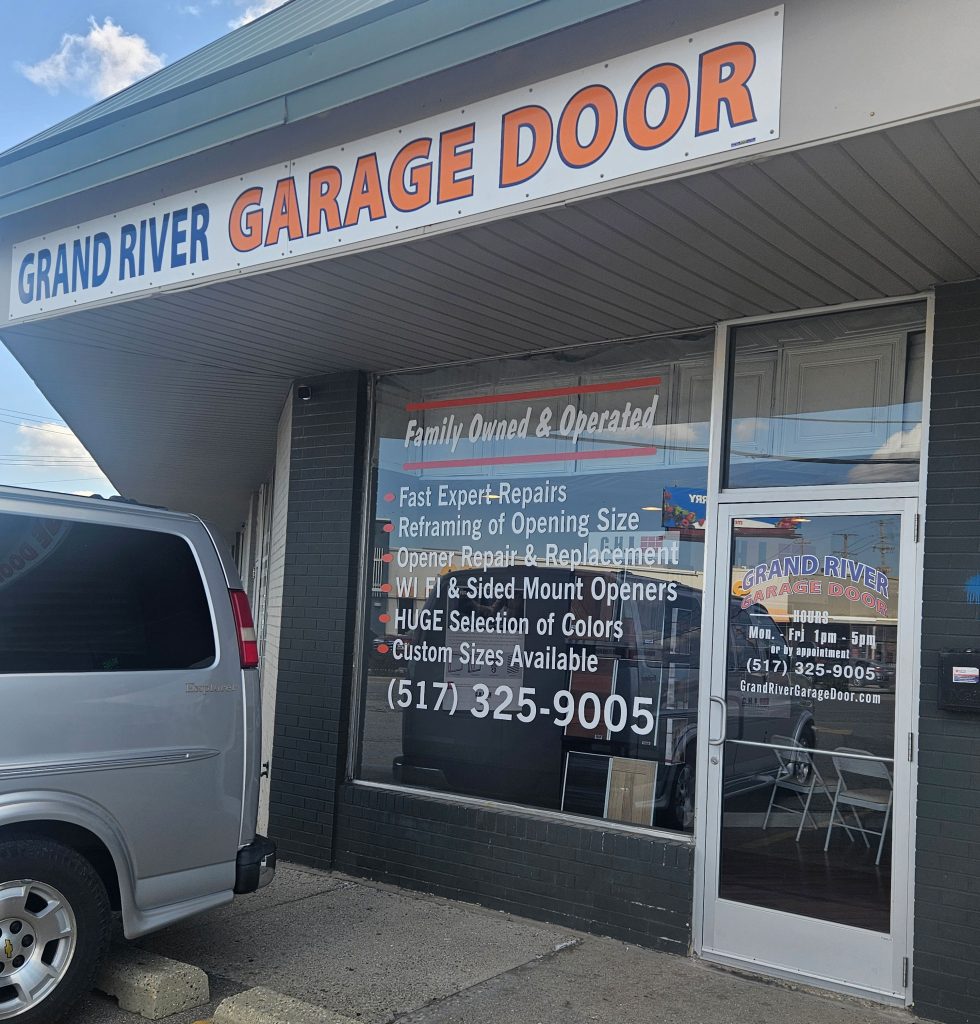

Garage door springs wear out faster than they should for specific, preventable reasons: exceeding the rated cycle count, incorrect spring sizing, lack of lubrication, harsh weather, an unbalanced door, and low-quality springs installed without proper technique. With over 35 years of spring replacement calls across Lansing, MI and surrounding areas, we have seen every version of premature spring failure, and in most cases the root cause traces back to one of these six factors. Understanding what accelerates spring wear helps you catch problems earlier, extend the life of your current spring, and make smarter decisions when replacement time comes.
This guide breaks down exactly what causes a garage door spring to wear out fast and what you can do about each one.
How Garage Door Springs Are Designed to Work and Why They Fail
A garage door spring does not simply hold the door up. It stores mechanical energy every time the door closes and releases it every time it opens, counterbalancing a door that can weigh anywhere from 130 to 350 pounds depending on the material and insulation level. That energy transfer happens through controlled winding and unwinding in the spring coils, repeating with every single cycle the door runs.
Residential torsion springs are typically rated for 10,000 cycles, which aligns with performance specifications referenced by the Door and Access Systems Manufacturers Association, known as DASMA, the industry body governing garage door component safety standards. For a household opening and closing the door four times a day, 10,000 cycles translates to roughly six to seven years of use. A household running eight or more cycles daily can cut that lifespan nearly in half.
That 10,000 cycle rating applies under ideal conditions: correct sizing, proper lubrication, a balanced door, and moderate temperatures. When any of those conditions are missing, the spring hits that threshold years ahead of schedule. That is where premature failure begins and where the rest of this guide picks up.
The Door Is Opened and Closed More Than the Spring Was Rated For
Cycle count is the most straightforward cause of spring wear and the most overlooked. Most homeowners assume a spring lasts a fixed number of years regardless of use. In reality, the spring only counts cycles, and a busy household burns through them fast.
A family with two vehicles and a garage used as the primary entry point can easily run ten to fourteen cycles a day. At that rate, a standard 10,000-cycle torsion spring reaches the end of its rated life in under three years. We see this regularly on calls where a homeowner is surprised their spring failed so soon after the last replacement, and once we walk through their daily usage the math becomes clear immediately.
The solution for high-use households is upgrading to a high-cycle spring rated for 20,000 or 30,000 cycles. These springs use higher-quality steel, tighter tolerances, and better heat treatment. The upfront cost is higher, but the lifespan difference is significant and the number of replacement calls drops considerably over time.
The Spring Was Never the Right Size for the Door
Spring sizing is one of the most technically critical parts of a garage door installation and one of the most commonly done wrong. A torsion spring is sized based on three variables: the door’s exact weight, height, and track radius. Get any one wrong and the spring either works too hard on every cycle or fails to provide enough counterbalance, both of which accelerate wear.
An undersized spring winds further and works harder to lift the door’s full weight, developing metal fatigue faster than the rating assumes. An oversized spring creates excessive tension at the fully closed position, stressing the cable drums and bottom brackets over time.
We encounter incorrectly sized springs regularly on repeat-failure calls. A previous technician installed the closest spring on their truck rather than the correct specification, or a homeowner replaced it with a spring matching original dimensions but not the door’s current weight after insulated panels were added. Correct sizing requires measuring the door, calculating the weight, and selecting the spring to match precisely, not estimating.
Lack of Lubrication and Routine Maintenance
A garage door spring that is never lubricated does not just run dry. It actively destroys itself. Every cycle creates friction between the coils as they wind and unwind, and without lubrication that friction generates heat, accelerates metal fatigue, and creates microscopic surface damage that eventually propagates into a full coil fracture.
On calls involving springs that failed before their rated cycle count, neglected lubrication is one of the first things we check. A neglected spring has a dull, gritty surface with visible rust between the coils. A well-maintained one has a smooth, slightly shiny surface and moves without resistance.
Proper lubrication uses a lithium-based or silicone-based spray applied directly to the coils with the door closed. WD-40 is not the right product. It displaces moisture temporarily but evaporates quickly and leaves coils unprotected. For most Central Michigan homeowners, lubricating at the start of winter and again in early spring covers the two periods of highest stress on the spring system.
Harsh Weather and Extreme Temperature Swings
Central Michigan winters are hard on garage door springs. Metal contracts when temperatures drop, and a torsion spring already under tension becomes more brittle as the temperature falls. The colder the morning, the less elasticity the steel has to absorb the shock of winding under load.
The highest volume of spring failure calls we receive come on the coldest mornings of the year, when overnight temperatures have dropped well below freezing and the door has sat unused for hours. The spring has contracted, the lubricant has thickened, and the first cycle puts the coils under maximum stress all at once.
Freeze-thaw cycles compound the damage over time. Moisture collects in microscopic surface cracks, freezes, expands, and widens those cracks with every cycle. Springs without lubrication are most vulnerable because the protective film that slows moisture penetration is absent. For homeowners in Lansing, MI and surrounding areas, pre-winter spring maintenance is one of the most valuable service appointments of the year.
An Unbalanced Door Puts Extra Load on the Spring
A properly balanced garage door feels nearly weightless when lifted manually. When the door is out of balance, the spring compensates for the weight discrepancy on every cycle, and that extra load shortens its life considerably over time.
Balance shifts for several reasons. Heavier insulated panels replacing standard ones add weight the spring was not sized for. Worn cables change how load distributes across the drum. A door that has shifted in its frame puts more weight on one side than the other.
The homeowner-safe balance test is straightforward. Disconnect the opener using the manual release cord and lift the door by hand to the halfway point, roughly three to four feet off the ground, then release it. A balanced door stays in place. A door that drops or rises has a balance problem accelerating spring wear on every cycle. Any door that fails this test should be inspected by a technician before the spring pays the price.
Low-Quality Springs and Poor Installation
Not all garage door springs are built to the same standard, and the difference between a quality spring and a budget replacement shows up clearly over time. Lower-grade springs use steel with inconsistent temper, meaning hardness and elasticity vary through the coil, creating weak points that fracture before the rated cycle count.
Poor installation makes it worse. A spring wound to the wrong tension starts every cycle either overloaded or underperforming. Incorrect mounting hardware allows the spring to shift position, changing the load angle on the coils. Missing safety cables, which run through the center of torsion springs to contain them if they snap, are both a safety hazard and a sign of a rushed installation.
At Grand River Garage Door, we use high-cycle springs from quality suppliers and size every replacement to the exact specification of the door. After 35 years of spring replacements across Lansing, MI and Central Michigan, we know what a correctly installed spring looks like and what it takes to make it last. The difference between a spring that reaches its rated cycle count and one that fails early almost always comes down to the quality of the parts and the precision of the installation.
Schedule Your Garage Door Spring Inspection Today
If your spring is showing signs of accelerated wear or it has been more than a year since your last maintenance visit, now is the right time to get it checked. Grand River Garage Door provides thorough spring inspections, quality replacements, and same-day service across Lansing, MI and surrounding areas. Our experienced technicians size every spring correctly, install it with precision, and check the full system before they leave. Reach out to Grand River Garage Door today and give your spring the attention it needs before a fast failure turns into an emergency call.