
Garage doors may seem simple from the outside, but the system that allows them to open and close smoothly is carefully balanced. At the center of that system are the springs. When one fails, the entire door can become heavy, unstable, or completely inoperable. That’s when garage door spring replacement becomes necessary.
Because springs are under high tension, replacing them is not like swapping out a worn roller or hinge. It requires precision, proper tools, and a clear understanding of how the garage door spring system works. This guide explains what happens during a professional garage door spring replacement so homeowners understand the process and why it matters.
What Do Garage Door Springs Actually Do?
Garage door springs are responsible for counterbalancing the weight of the door. Most residential garage doors weigh anywhere from 130 to over 300 pounds. Without springs, lifting the door manually would be extremely difficult.
There are two main types of springs used in a garage door spring system:
Torsion springs – Mounted horizontally above the door opening. These are the most common in modern systems and operate by twisting to create tension.
Extension springs – Located along the sides of the door tracks. These stretch and contract as the door moves.
When a spring breaks, the door may:
- Feel unusually heavy
- Refuse to open
- Open unevenly
- Make a loud snapping sound
A broken garage door spring disrupts the balance of the entire system, which is why garage door spring replacement must be handled carefully.
Why Garage Door Spring Replacement Requires Professional Handling
Springs operate under extreme tension. A torsion spring, for example, stores a significant amount of energy. If released improperly, it can cause serious injury or property damage.
The garage door spring replacement process involves:
- Safely controlling spring tension
- Using specialized winding bars
- Securing hardware properly
- Ensuring the door remains stable during service
Attempting to replace garage door springs without proper training and tools can be dangerous. That’s why this type of repair is generally considered a professional-level task.
Step 1 – Inspecting the Garage Door Spring System
Before beginning garage door spring replacement, the technician inspects the entire spring system.
This includes checking:
- Whether the spring is fully broken or partially fractured
- The condition of cables and drums
- The torsion shaft or side hardware
- Signs of wear on related components
This inspection confirms the correct type and size of replacement spring needed.
Step 2 – Safely Releasing Spring Tension
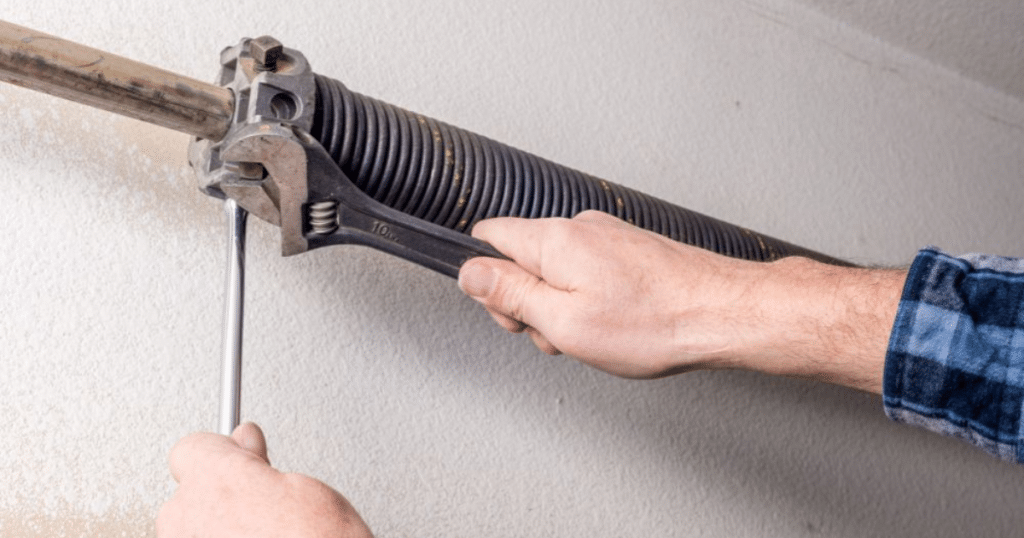
If dealing with a torsion spring, tension must be carefully released before removal. This is one of the most critical parts of the garage door torsion spring replacement process.
Using proper winding bars, the technician:
- Gradually reduces tension
- Secures the torsion shaft
- Ensures the door remains stable
This controlled process prevents sudden movement or injury.
Step 3 – Removing the Damaged Spring
Once tension is safely released, the broken spring can be removed.
During this stage, the technician:
- Disconnects the spring from the center bracket
- Slides it off the torsion shaft
- Inspects bearings and mounting hardware
When replacing garage door springs, it’s important to ensure surrounding components are still in good condition.
Step 4 – Selecting the Correct Replacement Spring
Not all springs are the same. Proper garage door spring replacement depends on accurate sizing.
Spring selection is based on:
- Door weight
- Door height
- Drum size
- Cycle rating
Most standard springs are rated for approximately 10,000 cycles (one open and close equals one cycle). Higher cycle springs are available and may last longer depending on usage frequency.
Using the wrong spring size can lead to imbalance, premature wear, or strain on the opener system.
Step 5 – Installing and Tensioning the New Spring
After selecting the correct spring, it is mounted onto the torsion shaft and secured in place.
The technician then:
- Applies precise tension using winding bars
- Aligns the spring correctly
- Secures set screws
- Ensures proper positioning on the shaft
Proper tensioning is critical. Too much tension can cause the door to rise too quickly. Too little tension can make the door heavy and difficult to lift.
This step is one of the most important parts of garage door spring installation.
Step 6 – Balancing and Testing the Door
Once the new spring is installed, the door must be balanced.
The technician performs a manual balance test by:
- Lifting the door halfway
- Checking if it stays in place
- Confirming smooth movement
If the door drifts upward or drops downward, adjustments are made.
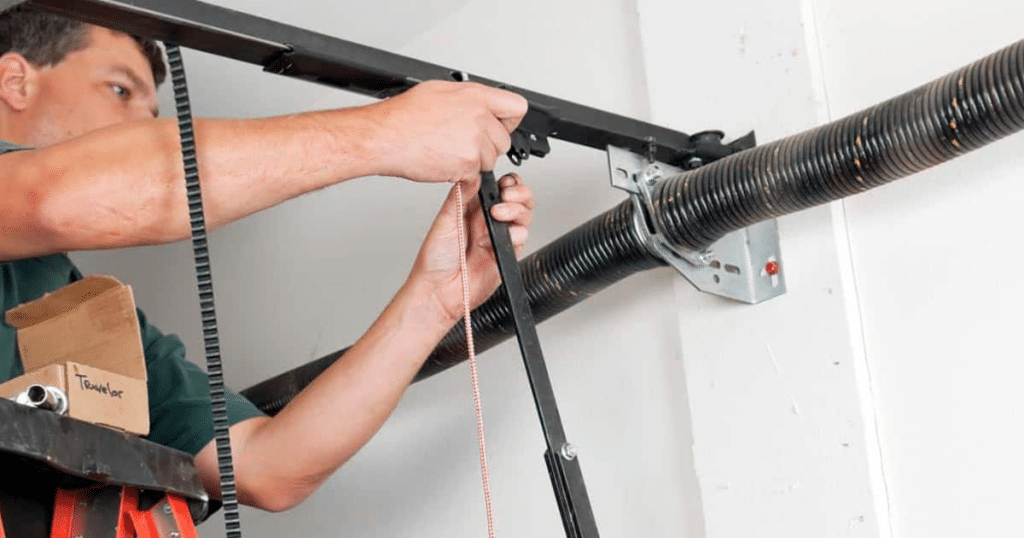
The opener is then reconnected and tested. A properly balanced system reduces strain on the motor and ensures safe operation.
What Homeowners Should Expect After Garage Door Spring Replacement
After a successful garage door spring replacement, homeowners typically notice:
- Smoother door movement
- Reduced noise
- Even lifting
- Less strain on the opener
The door should feel lighter and operate more consistently.
Because springs support the majority of the door’s weight, proper replacement restores balance and reliability.
Common Questions About Garage Door Spring Replacement
How long does garage door spring replacement take?
In most cases, replacing torsion springs takes one to two hours depending on the system and condition of hardware.
Can you replace just one spring?
If a system uses two torsion springs, professionals often recommend replacing both. Springs installed at the same time typically wear at a similar rate.
How long do new garage door springs last?
Standard springs are rated for around 10,000 cycles. Higher cycle springs may last longer depending on usage frequency.
What causes garage door springs to fail?
Spring failure is usually caused by:
- Normal wear and tear
- Rust buildup
- Frequent daily use
- Improper sizing
- Temperature fluctuations
Understanding garage door spring lifespan can help homeowners anticipate when replacement may be needed.
Understanding the Importance of Proper Garage Door Spring Replacement
Garage door spring replacement is a precise and safety-focused repair. Because springs are under high tension, the process requires careful handling, proper sizing, and accurate balancing.
While it may seem like a simple part, the spring plays a critical role in the entire garage door system. When replaced correctly, the door operates smoothly, safely, and reliably.
If you suspect your springs are worn or broken, having the system professionally inspected ensures the repair is done safely and correctly the first time. Grand River Garage Door provides careful evaluations and experienced service to help homeowners maintain a safe and properly balanced garage door system.